What is the difference between filtering and purifying water?
Access to clean water is an essential right and a necessity for health. However, when it comes to improving the quality of the water we consume, we are often faced with two terms that can lead to confusion: filtering and purifying. Although both processes are related, their differences are key when we seek to ensure that the water we drink or use is safe. Here, we explain in detail what each one consists of and when it is more appropriate to use a filter or a purifier.
What does it mean to filter water?
Filtering is a physical process that refers to the removal of solid particles suspended in a liquid, using a porous material or mesh. This process is commonly applied in domestic and commercial systems to treat water or air. In the case of water, the particles retained can range from sediment and sand to microorganisms of a certain size. One of the simplest ways to understand this concept is through an everyday example: imagine a cup of coffee. If you add a spoonful of sugar, it will dissolve easily in the hot liquid, but if you add too much, such as three or four spoonfuls, some particles will not dissolve and will remain at the bottom of the cup. These undissolved particles represent suspended solids, and are precisely what the filters remove from the water.
Types of filters and their importance
Filters come in different pore sizes, which are measured in microns. Depending on the type of contaminants you want to remove, you will need to choose a filter with the appropriate mesh size. For example, a typical water filter may have a pore size between 5 and 10 microns, enough to retain visible sediment or large particles, but insufficient to stop smaller microorganisms such as bacteria or viruses, which are typically smaller than 0.2 microns. Common filters include:
- Mesh filters: Retain large particles.
- Cartridge filters: Used to retain sediments in pre-filtration processes.
- Sand, anthracite or zeolite filters: Used in large-scale water treatment systems, especially in industrial or municipal treatment plants.
While these filters are effective in removing suspended solids from water or liquids, they do not remove dissolved contaminants such as mineral salts, bacteria or chemicals. This is where the purification process comes into play.
When is filtering not enough?
It is critical to understand that filtering is not enough when the goal is to remove microscopic contaminants. Although filtered water may appear clean and free of visible impurities, it still contains dissolved contaminants such as bacteria, viruses and certain chemicals. The pore size in conventional filters is not small enough to block these contaminants, and this poses risks if the goal is to make the water potable. One example is viruses and bacteria in water. Although they are suspended solids and do not dissolve, they are tiny in size (much smaller than most visible particles), allowing them to pass easily through a conventional filter. To retain them, an extremely fine filter would be needed, with pores of less than 0.2 microns. This is where the purification process comes in, which encompasses not only filtration, but also other methods that ensure that the water is completely free of pathogens and chemical contaminants.
-
Parker PEACH-PURE PCLAS PCLAS Viscous Liquids Filter
Add to quote -
Aquatrol fiberglass tanks for water filters
Add to quote -
Parker PHP series single and multi-cartridge filter holder for liquid filters
Add to quote -
Multi-bag filter holder EB for liquids in the Parker industry
Add to quote -
PEPLYN HA Parker beverage clarification filter PEPLYN HA Parker
Add to quote -
Parker PREPOR NG Microbial and fine particle reduction filter PREPOR NG
Add to quote -
Filter holder with 1 EB single bag for liquids in Parker industry
Add to quote -
Parker PROPOR HC sterilizing filtration cartridge PROPOR HC
Add to quote -
PROPOR BR Parker Bioburden Reduction Filter PROPOR BR Parker
Add to quote -
PROPOR MR Parker mycoplasma removal filter PROPOR MR Parker
Add to quote


What is water purification?
Purification means removing not only suspended solids, but also dissolved contaminants that may include pathogenic microorganisms and harmful chemicals. Unlike filtration, which is primarily a physical process, purification encompasses a variety of methods that can be both physical and chemical.
Common purification methods
- Activated carbon: Purification generally begins with removing dissolved elements in the water. Activated carbon is one of the most commonly used tools at this stage, as it can absorb organic contaminants and certain chemicals such as chlorine.
- Disinfection: To eliminate bacteria and viruses, purification includes disinfection processes such as the use of ultraviolet (UV) light or chemicals such as chlorine. These methods inactivate microorganisms, making them harmless for human consumption.
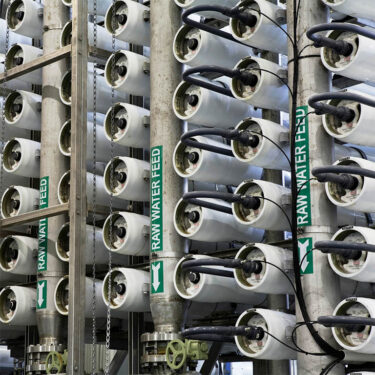
- Reverse Osmosis: This is one of the most advanced purification systems. Reverse osmosis uses a semi-permeable membrane that not only filters large particles, but also removes dissolved contaminants, such as heavy metals and microscopic microorganisms. The advantage of this system is its ability to remove even the salts and minerals present in the water, resulting in extremely pure water.
In many domestic and commercial purification systems, reverse osmosis is combined with other filters, such as ultrafiltration to provide a complete water purification solution. An interesting fact is that, without adequate prior protection, the reverse osmosis membrane could quickly become saturated or damaged due to its delicacy.
Water purification is a chemical process that removes or expels all dissolved organic and inorganic matter.
Water purification is a chemical or physical process at the molecular level that removes or expels all dissolved organic and inorganic matter from the water. It can be carried out by various methods, such as distillation, ultra or nano filtration, osmotization process and adsorption with activated carbon. Water purification is used to make water drinkable after it has been contaminated with harmful substances such as bacteria or chemicals such as arsenic.
-
Megapol 28-4 Powdered activated carbon for decolorization of wines, sugar…
Read more -
KL Silica powdered membrane cleaner for silica fouling
Select options This product has multiple variants. The options may be chosen on the product page -
BetterClean-D membrane cleaner removes silt, organic particles and organic and inorganic colloids
Select options This product has multiple variants. The options may be chosen on the product page -
AAM Activated carbon for color removal in tequila and other distillates
Add to quote -
Vitec 5100 Avista Scale Inhibitor (Seawater and Drinking Water Treatment Plants)
Add to quote -
LG SW 400 R membrane, 8×40″ seawater reverse osmosis membrane
Add to quote -
RoClean L211 cleaning of membranes with organic matter fouling
Add to quote -
RoClean P112 Membrane Cleaner for Silica SiO2
Add to quote -
RoClean P111 Biofouling RO Membrane Cleaner
Add to quote -
Avista’s RoQuest 6000 Coagulant for Turbidity Reduction
Add to quote -
RoQuest 4000 Liquid Coagulant for Organic Matter Avista
Add to quote -
RoQuest 3000 Organic Liquid Coagulant from Avista
Add to quote -
Avista’s Vitec 7400 for Silica and Sulfate Control
Add to quote -
RoClean L403 Calcium Carbonate and Metal Scale Cleaner by Avista
Add to quote -
RoClean P303 Calcium Carbonate & Metal Scale Cleaner
Add to quote -
Titan Antifouling for Reverse Osmosis Membranes
Select options This product has multiple variants. The options may be chosen on the product page -
Biocide for reverse osmosis membranes BioGuard
Select options This product has multiple variants. The options may be chosen on the product page -
SpectraGuard® Reverse Osmosis Membrane Antiscalant
Select options This product has multiple variants. The options may be chosen on the product page -
CPA2, CPA3, CPA5, CPA6 and CPA7 Hydranautics composite polyamide membranes
Add to quote -
RO-4040-FF and RO-390-FF FilmTec DOW DuPont RO-4040-FF and RO-390-FF membranes
Add to quote












Filter vs. Purify: Which Do You Need?
So what is the key difference between filtering and purifying? Basically, filtering is a process that removes large, visible particles, while purification is more thorough and removes invisible contaminants as well, ensuring that the water is safe for human consumption.
When to use a filter?
If you want to remove sediment, sand or suspended particles in the water, a filter will suffice. These systems are useful to improve the visual quality of the water and to remove physical contaminants that may be harmful to your health if ingested in large quantities. For example, if you obtain water from a well or natural source, a basic filter may be sufficient to remove leaves, dirt, or other sediment that at first glance contaminates the water. However, you should not assume that filtered water is safe to drink, as it still contains microorganisms and possible chemical contaminants.
When to opt for purification?
If the water you use has biological contaminants (such as bacteria or viruses) or dissolved chemicals (such as chlorine, heavy metals or pesticides), then purification will be necessary. Purification systems are ideal when the goal is to produce safe drinking water, free of any contaminants that may pose a health risk. A key point to keep in mind is that, typically, purification includes filtration as the first stage. This means that both filters and purifiers work together to ensure that the water is completely free of any impurities.
Reverse Osmosis: The Advanced Solution for Water Purification
Reverse osmosis is the most advanced and effective method of water purification available today. Its ability to remove up to 99% of contaminants, including dissolved contaminants such as sodium, chlorine, lead and microorganisms, makes it the ideal choice for those seeking the purest water possible. The reverse osmosis process requires the water to pass through several stages of filtration and purification before reaching the osmosis membrane. This system typically includes a sediment filter to remove large particles and an activated carbon purifier that retains chemicals and organics. Once the water has passed through these filters, it finally reaches the osmosis membrane, where any remaining contaminants are removed. Importantly, reverse osmosis removes even essential minerals from the water, which can be a drawback if you are looking for nutrient-rich water. However, for those who prioritize purity above all else, this is the safest and most effective option.
Choose between Filtering and Purifying water
When choosing between filtering and purifying, it is important to evaluate your specific needs. If your goal is to remove large, visible particles, a filter will suffice. But if you are looking to ensure safe drinking water free of bacteria, viruses and chemical contaminants, a purification system, especially one based on reverse osmosis, will be the more appropriate choice. Remember that not every filter is a purifier, and although filtered water may look clean, purification is the process that truly guarantees its safety for consumption.
Related articles:
Difference between water filtration and water purification
3 Most Common Types of Water Filtration and their Applications